
Pantry inventory checklist: keep the next shop simple
A pantry inventory checklist should show the food you have, where it is, how much is available and any relevant date. Include fridge and freezer food too. Keep quantities simple and use the information to decide what needs using and what belongs on your next shopping list.
A pantry list can become more work than the shopping itself if it asks for exact weights, repeated counts and a second set of notes. The useful version answers a few everyday questions: what food is available, where is it, and does the next shop need to include more? The record should support those decisions without taking over your evening.
What should a pantry inventory checklist include?
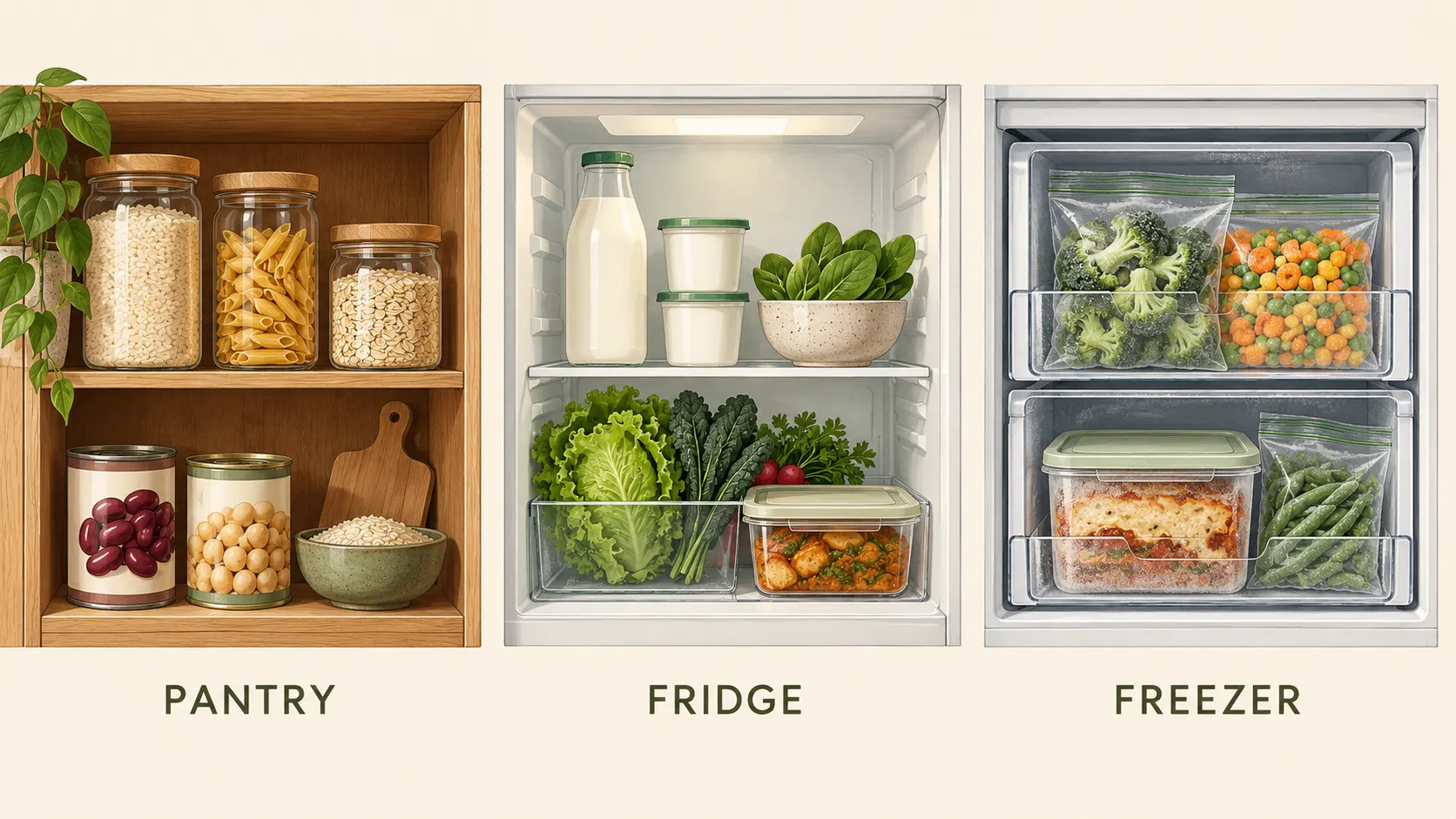
The useful information is the food’s name, its storage place, the amount available and a relevant date or use-first note. Include the cupboard, fridge and freezer so stored meals and frozen ingredients remain visible. A product category alone, such as tins or dairy, cannot tell you which food is actually available.
| Information | Example | What it helps answer |
|---|---|---|
| Food | Rice, yoghurt, a frozen meal | What is already at home? |
| Location | Cupboard, fridge or freezer | Where is it? |
| Availability | Unopened pack, running low, finished | Is more needed? |
| Relevant date | The printed use-by date | What needs attention first? |
These are examples of useful information, not a requirement to catalogue the whole kitchen. A frozen meal deserves a place alongside ingredients: it is already an option for dinner, even though there is nothing new to buy for it.
Want your food records and shopping plan together? Join Marsonya’s early-access list and we will email you when access opens.
Does every item need a precise count?
A useful inventory does not need the weight of every opened packet. The detail should match the decision: whether there is enough for a meal or another pack is needed. Exact quantities matter for some recipes, but weighing remaining rice or counting tea bags after each use adds work to an ordinary shop.
For food dates, keep the meaning of the label clear. A use-by date concerns safety; a best-before date concerns quality. Follow the label and storage instructions. Food Standards Australia New Zealand explains those labels. Our NZ date-label guide connects the rules with keeping food records.
How can the inventory stay useful without becoming another job?
Purchases and finished items are the changes that make a food record go stale. A paper list leaves those updates to the household. A digital system can capture purchases and make use updates quick, reducing the copying involved. Choose a method that fits buying, unpacking and cooking rather than creating a separate accounting routine.
Marsonya uses barcode lookup and catalogue search to identify packaged products. The camera saves recognised printed dates with the food record, reducing repeated date entry. A quick Eaten swipe updates one tracked unit when it is used. Those actions work with the household record rather than a second set of shopping notes; unclear scans can need correction.
Those features help keep pantry, fridge and freezer records useful without copying the same purchases into another list.
How is an inventory different from a shopping list?
An inventory describes the food already at home; a shopping list describes the gaps. A list of kitchen staples can include rice even when there is plenty in the cupboard. Keeping that distinction clear means the inventory informs a purchase rather than becoming a standing order for another packet of everything.
Love Food Hate Waste NZ recommends planning from food in the pantry, fridge and freezer before making the shopping list. If repeated accidental purchases are the main problem, see how to stop buying groceries you already have.
In Marsonya, Buy Plan prices the selected shopping list and groups purchases by store. You choose what to buy; the app calculates the estimate. The retailer’s checkout confirms the final price and any delivery or collection charges.
What else do people ask about a pantry inventory checklist?
Should a pantry checklist include the freezer?
Yes. Frozen ingredients and prepared meals are food already available at home. Including their location helps distinguish food in the freezer from similar items in the cupboard or fridge.
Do I need to weigh opened packets?
No. For ordinary shopping decisions, knowing whether you have enough or need more is often sufficient. Precise amounts matter when a particular recipe needs them, rather than as a daily inventory routine.
Is an inventory the same as a shopping list?
An inventory describes food already at home. A shopping list describes the purchases you still need. Keeping those purposes distinct helps avoid treating every food in the kitchen as something to buy again.