
Best-before vs use-by dates: what's the difference?
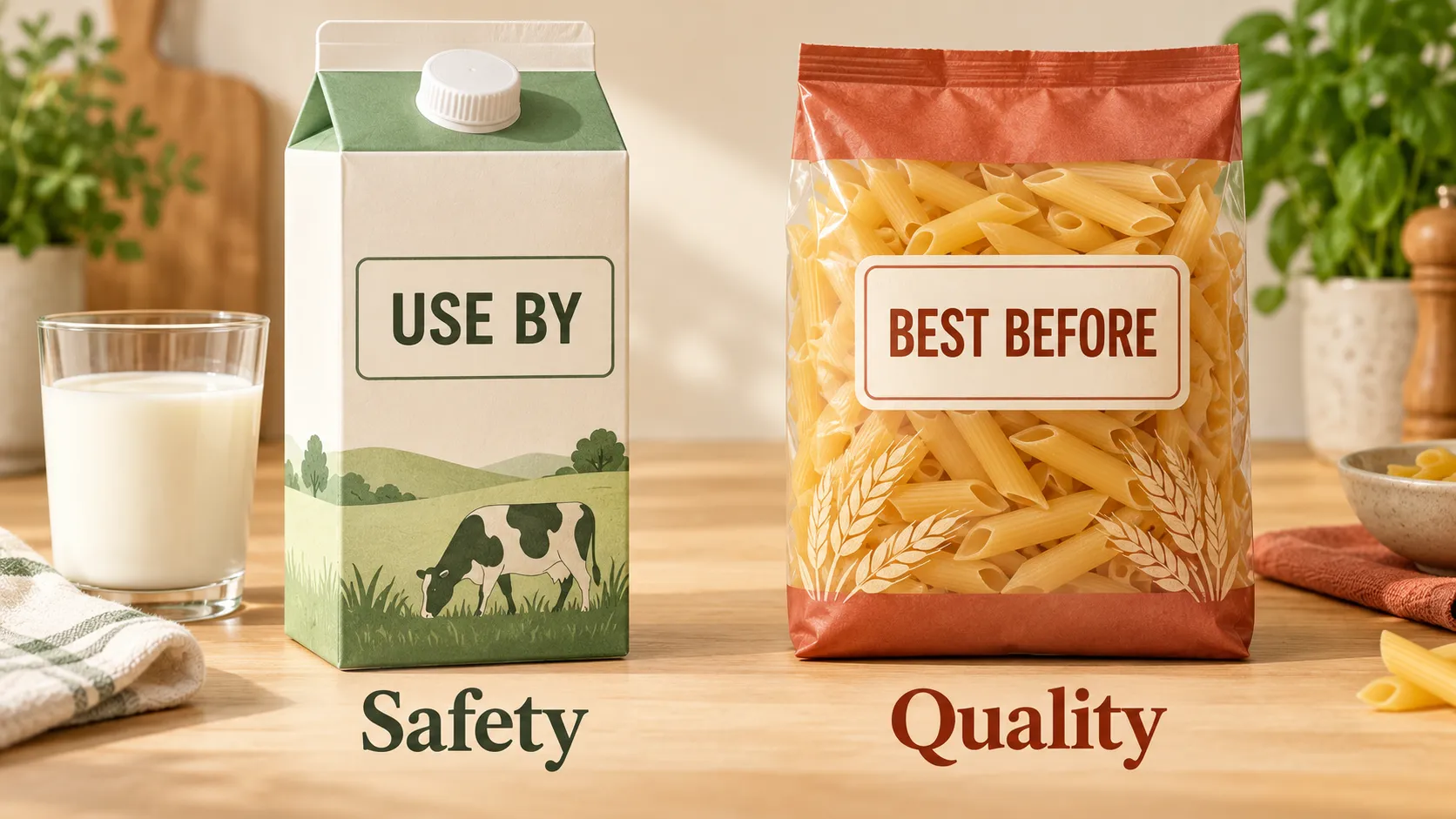
A use-by date concerns safety: food should not be eaten or sold after it in New Zealand. A best-before date concerns quality. Food may still be suitable after a best-before date if stored correctly and fit to eat. Follow storage instructions, including any time limit after opening.
Read the words beside a food date before deciding what to do with it. A use-by date sets a safety limit. A best-before date concerns quality, so reaching that date does not by itself mean the food must be discarded. Storage instructions still matter for both.
To keep food dates with your pantry, fridge and freezer records, join Marsonya’s early-access list. We will email you when access opens.
What does a use-by date mean?
A use-by date marks food safety. Food can become unsafe before it looks, smells or tastes wrong. Follow the printed date and storage instructions, and discard food after its use-by date. In New Zealand, selling food past a use-by date is illegal, and New Zealand Food Safety asks shoppers to report stores that do.
What does a best-before date mean?
A best-before date marks quality, not safety. Correctly stored food with a best-before date may still be suitable after the date passes, though texture, colour or flavour may decline first. New Zealand rules allow stores to sell food past a best-before date, provided the food remains fit to eat, which is why discounted short-dated shelves are legal (Food Standards Australia New Zealand).
Why does bread carry a baked-on date instead?
Bread with a shelf life under seven days plays by a special rule: Food Standards code 1.2.5 lets bakers print a baked-on or baked-for date in place of a best-before date. A baked-for date can sit at most 12 hours after the loaf actually came out of the oven, so either form indicates when the bread was baked or intended for sale. Check its condition and storage instructions as well as the date.
Is food safe to eat after its best-before date?
Food may still be suitable, provided it has been stored correctly and remains fit to eat. Follow any instructions for use after opening. A best-before date is not a guarantee about an opened packet’s condition. Food past a use-by date should not be eaten even if it looks and smells normal; a smell check cannot establish its safety.
How does Marsonya tell the dates apart?
Marsonya’s camera scanner saves recognised printed dates with the food record, reducing date typing. Mobile reminders can bring the date back to mind when phone notifications are allowed. Follow the label’s wording and storage instructions when deciding what to eat: an app reminder does not assess the food’s condition or extend its use-by date.
For planning around those dates, see reducing food waste at home. The food storage guide lists times for common foods, including guidance for opened packets and leftovers.
What else do people ask about food date labels?
Does a best-before date tell me when to throw food away?
Not automatically. A best-before date concerns quality. Correct storage and the food's condition still matter, especially after opening. A use-by date is a safety limit and should not be ignored.
Can I use smell to check food past its use-by date?
No. Food can be unsafe before it looks or smells wrong. Follow the use-by date and the storage instructions rather than relying on a smell test.
Does scanning a date mean the app has checked the food?
No. Marsonya records recognised printed dates and can schedule mobile reminders with notification permission. A date reminder does not test food or replace the label's safety and storage instructions.