
Which supermarket is cheapest in NZ?
A dated basket study can help compare supermarkets, but it cannot identify the cheapest shop for every household. Start with the food you need and compare available store prices for that list, including travel and fees. Marsonya connects household food records with one-store or split-store Buy Plan estimates.
Checking what is at home helps you avoid paying for duplicate groceries. Once you have a list of missing items, compare its cost at stores you can use. The lowest price for one product does not necessarily make a store cheapest for the whole shop.
Marsonya keeps household food records and the next shopping plan together. Join the early-access list to hear when access opens.
Which is cheaper: Pak’nSave, New World or Woolworths?
Consumer NZ’s June 2026 study compared a 16-item basket collected over eight weeks in four cities. Pak’nSave averaged $84.38, about $5 a week cheaper than the loyalty-member average at New World and Woolworths, with fresh meat and produce excluded. The result applies to that basket and observation period. Your list, nearby stores and current offers can produce a different comparison.
The full Pak’nSave vs New World vs Woolworths comparison explains the study’s scope and how to compare the stores you use.
Why are groceries so expensive in NZ right now?
The Commerce Commission’s June 2026 competition report says the major supermarkets retained over 80% of the national retail market. Competition and supply costs affect grocery prices, while the timing and effects of proposed reforms remain uncertain. For this week’s shop, compare the cost of food still needed and change purchases that exceed your budget.
The guide to NZ grocery costs explains concentration, measured inflation, supply costs and the current reform debate.
How can I cut my weekly grocery bill?
Build a list from what is missing at home, then compare its total cost. Check unit prices and recent prices before buying extra on special. Change brands when the cheaper product suits your household’s meals and dietary needs. Buying more is useful only if you can afford it and will use it.
The grocery savings guide takes you through that routine, including pack sizes, top-up shops and a spending limit.
To set a spending limit and check the next shop’s estimated cost, see our simple household grocery budget guide. It explains how Marsonya’s Buy Plan helps you adjust a list before checkout.
If a familiar packet holds less than before, check how smaller packs affect the cost of restocking before buying the usual number again.
When choosing between current pack sizes, our NZ supermarket unit-pricing guide explains why a lower price per litre does not always mean spending less at checkout.
Our guide to supermarket specials explains multibuy conditions and when buying extra fits the food your household needs.
For food you want to keep across several shops, see when buying groceries in bulk saves money. The answer depends on what your household will use and has room to store.
How does Marsonya compare prices across all three chains?
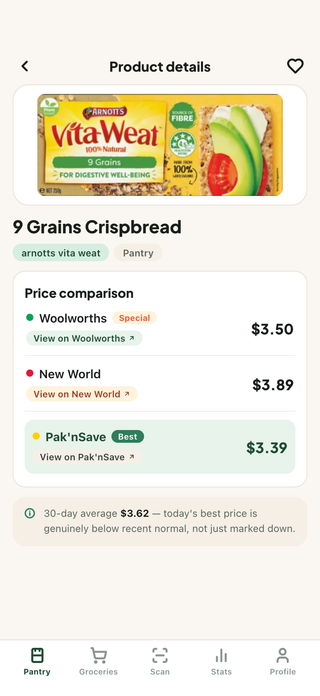
- Selected-store price comparisonavailable listings from Woolworths, Pak'nSave and New World; final prices are confirmed by the retailer
- Deals judged against real averagesa special counts only against the item's own 30-day average price
- AI-ranked substitutionssimilar items ranked by likeness, with the price difference shown
- Whole-list store totals
What else do people ask about grocery prices?
How current are Marsonya's prices?
Prices come from each chain's public store listings and refresh on a nightly schedule. Check the retailer's current price before paying. Marsonya compares specials with an item's own 30-day average so you can see how the offer compares with recent prices.
Does Marsonya get paid by any supermarket?
No. Marsonya is an independent, family-built app from Christchurch with no commercial relationship with Woolworths, Foodstuffs or any retailer. Recommendations use the compared prices. No retailer can pay for placement.
Why do prices differ between stores of the same chain?
Pak'nSave and New World stores price individually, so the same item can cost different amounts across town. Check online prices against your selected store, including loyalty conditions and availability. Marsonya compares the stores your household can use.
Can Marsonya tell me the cheapest store for my whole list?
Buy Plan estimates a selected list from available store prices, with one-store and split-store options. Include travel and fees in your decision. The retailer confirms final prices and availability; an estimate is not a guaranteed cheapest basket.