
Pak'nSave vs New World vs Woolworths: which is cheapest?
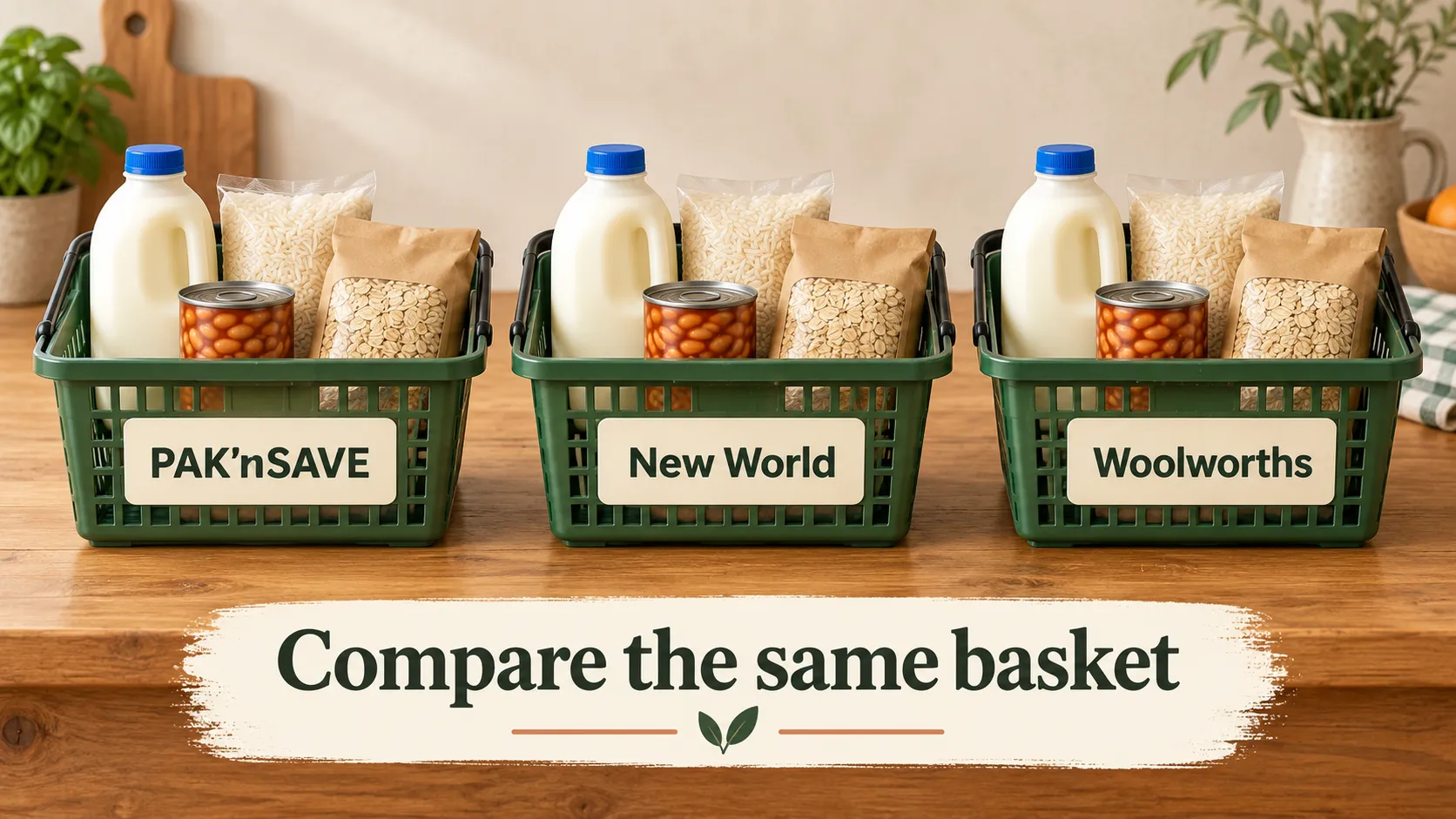
Pak'nSave was cheapest in Consumer NZ's June 2026 study of a 16-item basket in four cities, with fresh meat and produce excluded. Its average was about $5 a week below the average for New World and Woolworths loyalty members. Your cheapest shop depends on your list, nearby stores and current offers.
Consumer NZ’s study is a useful comparison for a fixed basket. Before choosing where to shop, check the cost of the groceries your household needs at the stores you can use. Current offers and loyalty conditions may change that result.
To connect a stock check with your next shopping plan, join Marsonya’s early-access list. We will email you when access opens.
What did Consumer NZ’s study actually find?
Across eight weeks in Auckland, Wellington, Christchurch and Dunedin, Consumer NZ priced a fixed 16-item basket at 12 supermarkets, using University of Auckland food-price data (June 2026). Pak’nSave averaged $84.38 for the basket, roughly $5 a week under the New World and Woolworths loyalty-member average. Fresh meat and produce were excluded from the study for quality-variation reasons (Consumer NZ).
Why can’t one study crown a cheapest supermarket?
A fixed basket answers for the average of 16 items, not for any real household’s trolley. Prices and specials change, and Pak’nSave and New World stores price individually. Select your store when checking online prices, and keep pack sizes and loyalty conditions comparable. The cheapest option for your current list may differ from the study result.
How do you compare the three chains yourself?
Compare the groceries still needed, rather than an unrelated basket of popular products. Keep pack sizes, quantities and membership conditions comparable at stores you can use. Include travel, delivery or pickup charges in the decision. A price-comparison tool can organise available listings, but a few cheap staples do not establish the cheapest store for your whole list.
Consumer Protection explains how unit prices help compare different pack sizes. Match the measure before treating one listing as cheaper.
What does Marsonya do differently?
Marsonya connects your pantry, fridge and freezer records with the next shopping list. Buy Plan estimates the selected list from available Woolworths, PAK’nSAVE and New World store prices, with one-store and split-store options. You do not need to copy a price list for each shop. The retailer confirms final prices, availability and charges at checkout.
Tap a product in Marsonya to see its available prices across Woolworths, PAK’nSAVE and New World in one place. You can check individual options before choosing the whole-list plan.
The grocery savings guide covers deals and substitutions. The home page’s price table shows a matched basket with its observation date and named stores. For competition and supply costs, see why groceries cost so much in New Zealand.
What else do people ask about NZ supermarket prices?
Does the study result identify the cheapest shop for my family?
No. The result applies to the study's basket and observation period. Your needed foods, nearby stores, offers and fees can produce a different comparison.
Should I compare only the cheapest price for each item?
Consider the whole needed list and the extra costs of a second stop. A lower price on one item may not cover travel, time or delivery charges.
Is a Buy Plan estimate a guaranteed checkout total?
No. Buy Plan uses available store prices to estimate the selected list. The retailer confirms final prices, availability and any collection or delivery charges when you check out.