
Food storage guide: how long does food really last?
Storage time depends on the food, temperature and whether the packet is open. Follow the label's storage instructions and use-by date. The tables give sourced fridge, freezer and pantry ranges for common foods. For leftovers in a New Zealand kitchen, follow the local two-day and four-day guidance below.
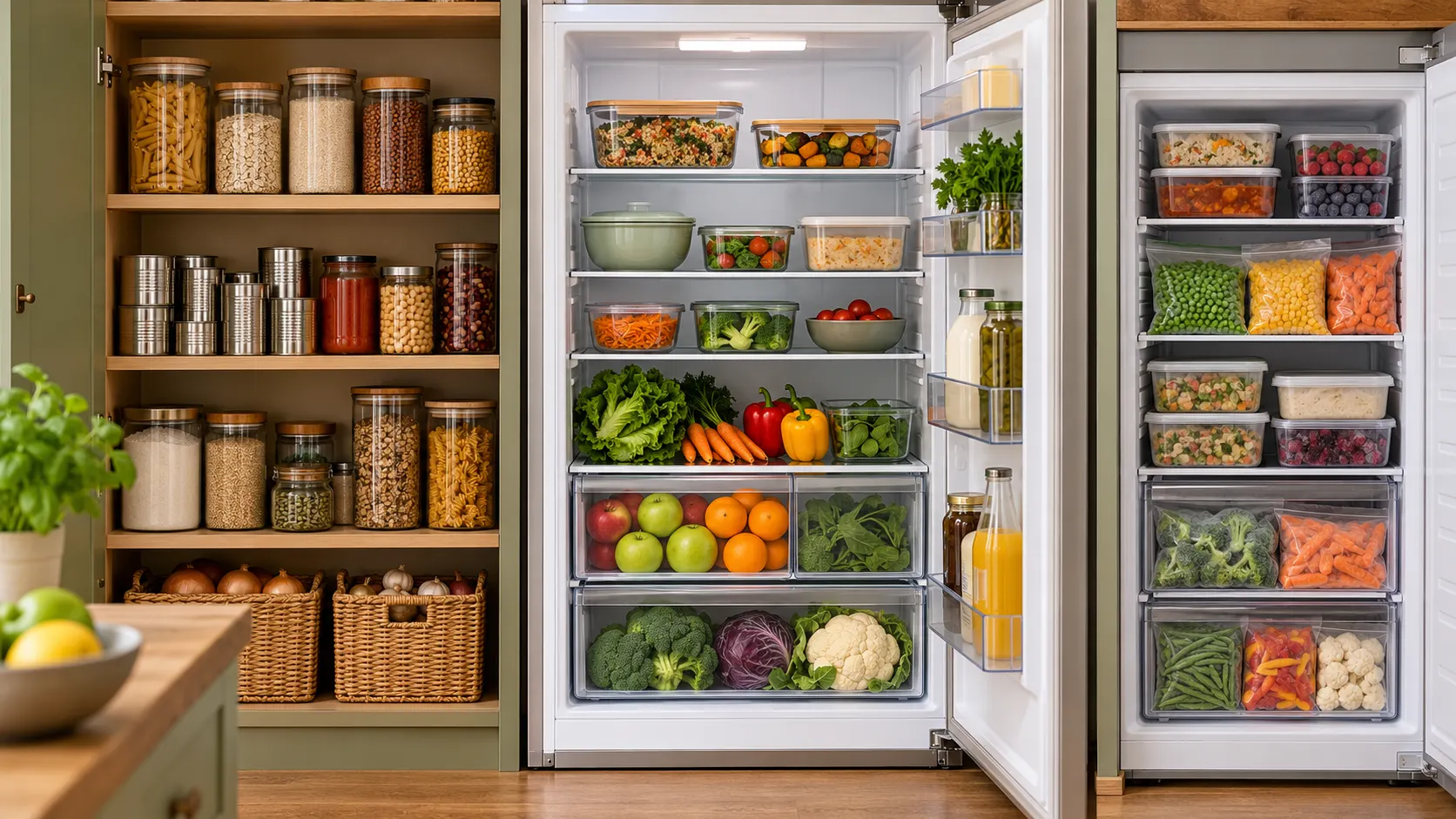
Check the label first, especially instructions for use after opening. A general storage table cannot account for how a particular packet has been handled. Use the ranges below alongside the label and the applicable food-safety guidance.
Marsonya keeps food dates with your pantry, fridge and freezer records. Join the early-access list to hear when access opens.
What do NZ date labels actually promise?
Food should not be eaten or sold after a use-by date. A best-before date concerns quality, and correctly stored food may still be suitable after it. Bread with a shelf life under seven days may carry a baked-on date instead. The full explainer on use-by versus best-before covers each label’s rules.
How long does food keep in the fridge and freezer?
These ranges come from FoodSafety.gov’s US cold food storage chart, linked as “Cold chart” in each row. Fridge times assume 4°C or colder; freezer times describe quality for food that was safe before freezing and stays frozen. Use the shorter NZ guidance in the next section for leftovers.
| Food | Fridge | Freezer | Source |
|---|---|---|---|
| Fresh eggs, in shell | 3-5 weeks | Don’t freeze in shell | Cold chart |
| Mince and stew meat, raw | 1-2 days | 3-4 months | Cold chart |
| Bacon | 7 days | 1 month | Cold chart |
| Cooked meat or poultry leftovers | 3-4 days | 2-6 months | Cold chart |
| Soups and stews | 3-4 days | 2-3 months | Cold chart |
| Prepared salads (egg, chicken, tuna, ham, macaroni) | 3-4 days | Don’t freeze well | Cold chart |
Source: FoodSafety.gov cold food storage chart, rechecked 15 October 2026.
How long do leftovers keep in New Zealand?
New Zealand Food Safety advises refrigerating leftovers within two hours of cooking. Eat reheated-hot leftovers within four days, and give only two days to rice dishes and to anything eaten cold, like pasta or potato salad. The leftovers guide explains the limits and the risk from rice kept at room temperature.
How long do pantry staples keep?
These ranges describe quality under suitable storage conditions. They come from the United States Department of Agriculture’s FoodKeeper data and shelf-stable food guidance. Opening a packet changes its storage needs. Follow the label, keep dry foods sealed, and avoid heat and moisture rather than assuming the unopened range still applies.
| Food | Pantry | Source |
|---|---|---|
| White rice, uncooked | 2 years unopened; 1 year opened | USDA FoodKeeper |
| Dried pasta | About 2 years | USDA FoodKeeper |
| White flour | 6-12 months unopened; 6-8 months opened | USDA FoodKeeper |
| Commercial low-acid canned food (meat and most vegetables) | 2-5 years unopened, stored cool and dry | USDA FSIS shelf-stable food guidance |
Pantry references: the USDA FoodKeeper database and USDA FSIS shelf-stable food safety guidance, both accessed August 2026.
Does frozen food go bad?
Food that was safe before freezing and is kept continuously frozen at −18°C remains safe indefinitely, according to the USDA’s Food Safety and Inspection Service. Freezer ranges describe quality. Freezing does not make unsafe food safe, and thawing changes the storage conditions, so follow the applicable handling guidance.
Where do these numbers come from?
Each table names the source for its ranges. US per-food charts are kept separate from NZ date-label and leftover guidance. The USDA’s FoodKeeper, developed with Cornell University and the Food Marketing Institute, covers a broader range of foods. If a food or storage situation is not covered here, consult its label and the relevant authority rather than extending a range from another food.
Can an app watch the dates for you?
Marsonya reads recognised printed dates with the phone camera and saves them with the food record, reducing date typing. The mobile app can schedule reminders when phone notifications are allowed. Leftovers without a printed date still need a name and a date chosen from the cooking day and applicable guidance. The app does not calculate a safe storage period or assess food. See reducing food waste at home for ways to plan around usable stock.
What else do people ask about storing food?
Does a storage table override the date on a packet?
No. Follow the label's use-by date and storage instructions, including any shorter limit after opening. A general table cannot show how that particular food has been handled.
Do freezer times say when food becomes unsafe?
The freezer ranges here describe quality for food that was safe before freezing and stays frozen. Freezing does not make unsafe food safe. Thawing changes the storage conditions.
Can Marsonya decide whether my leftovers are safe?
No. Marsonya can keep a date and a reminder with a food record. For leftovers without a printed date, choose the date using the cooking day and applicable guidance. An app does not assess the food.