
Shrinkflation in NZ: when the same price buys less
Shrinkflation means a product contains less while its price stays the same or rises. Check the net weight or volume against the pack you bought before, then compare the price for the same quantity. Before restocking, subtract usable food already at home from what your household needs. Buy enough for that gap.
A familiar box and an unchanged price can hide a smaller amount of food. Consumer NZ’s February 2026 explainer describes shrinkflation as downsizing a product without reducing its price. For a household, the useful comparison is how much food the new pack supplies and how much must be bought next time.
How can you tell whether a grocery pack has shrunk?
A smaller net weight or volume for the same product can indicate shrinkflation, but the comparison needs an earlier pack size. Use existing dated packaging information, an old photo or a reliable published comparison if available. You do not need to start a pack-and-receipt diary to choose what to buy today.
Two sizes sold beside each other do not establish a size change over time. For today’s purchase, the current net weight and unit price help you compare the packs actually on sale. Check the number and size of portions in a multipack too.
To keep your kitchen stock and shopping plan together, join Marsonya’s early-access list. Leave your email and we will let you know when early access opens.
How much dearer is a smaller pack?
A smaller pack changes the price for a fixed amount of food even if the checkout price stays unchanged. Calculate the price per 100 g by dividing the pack price by its weight in grams and multiplying by 100. Compare the old and new results using the same measure and the same price conditions.
Source: Marsonya’s hypothetical cereal example, prepared 8 October 2026. The quantities and prices below are invented to show the calculation, not taken from a brand, store or receipt.
| Cereal pack | Earlier pack | Smaller replacement |
|---|---|---|
| Net weight | 500 g | 400 g |
| Price for one pack | NZ$5.00 | NZ$5.00 |
| Price per 100 g | NZ$1.00 | NZ$1.25 |
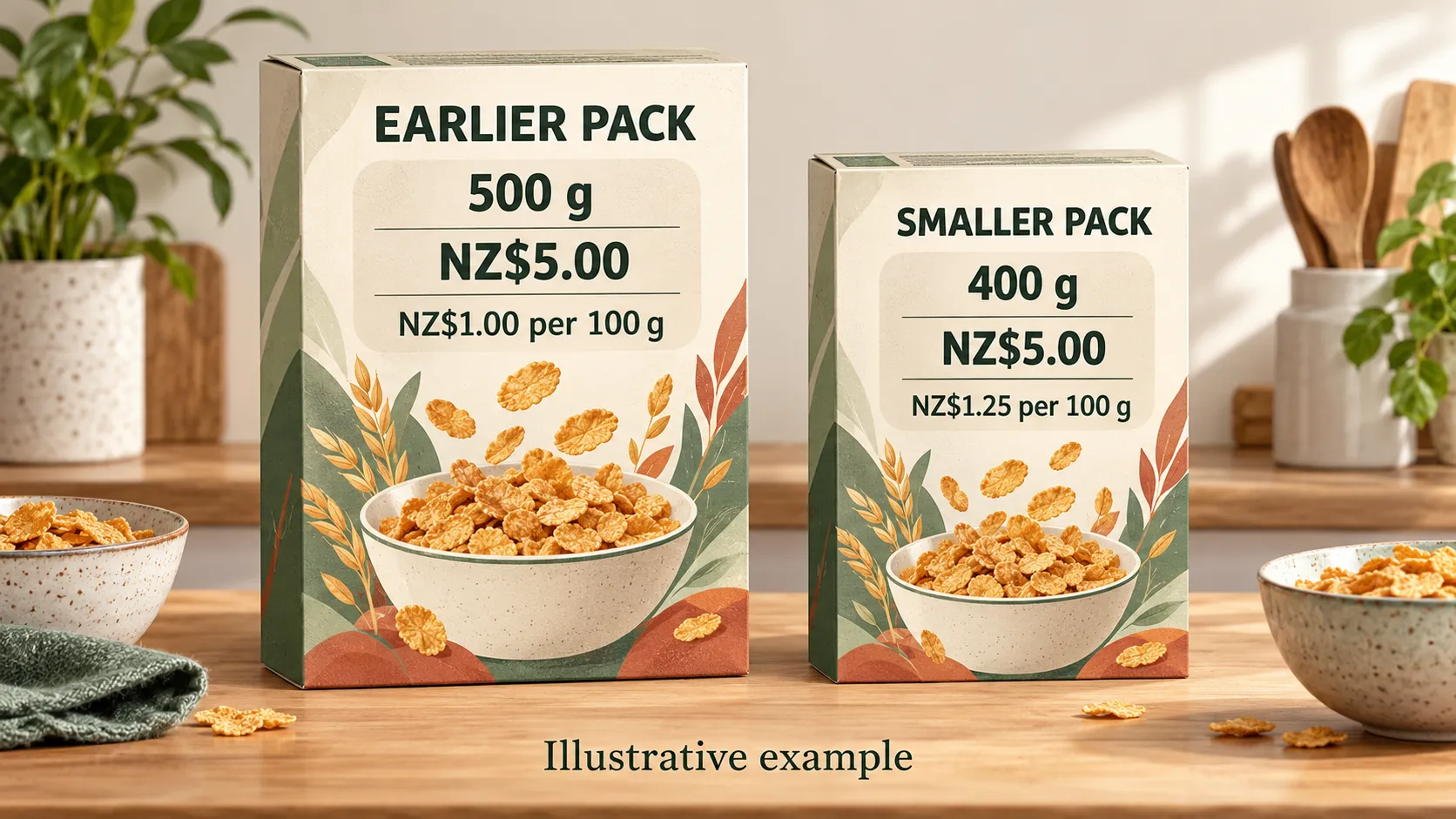
The replacement contains 20% less cereal. The cost of the same quantity rises by 25%. Those percentages differ because the pack loses 100 g from an original 500 g, while the price per 100 g rises by a quarter of its original value.
Consumer Protection’s unit-pricing guide explains how a common measure helps you compare pack sizes. Use the shelf or website’s unit price where available, and match the units if calculating from older receipts.
Why might your next shop need an extra packet?
A smaller packet can supply fewer meals, so buying the usual number may no longer cover what the household needs. Consider usable food already at home before adding another pack. The practical question is whether the purchase covers upcoming meals and fits the budget, rather than maintaining a detailed weight record for every opened packet.
Using food already paid for can lower this shop’s bill. That does not reverse a higher price per unit or establish a long-term saving. The unit-pricing guide explains how to compare today’s pack options.
What should you put on your next shopping list?
Choose the groceries still needed for upcoming meals, taking usable stock at home into account. A smaller pack may change that choice. If its price no longer fits the budget, consider a suitable alternative or a meal using more food already available, rather than automatically buying the same number of packets as last time.
Love Food Hate Waste NZ recommends planning around food already in the pantry, fridge and freezer. Follow storage instructions and your household’s dietary requirements when changing products or meals.
Where does Marsonya help with restocking?
Marsonya keeps household food records and shopping lists together. Barcode lookup identifies packaged food and camera scanning saves recognised printed dates, reducing the details you type. The food record helps you notice stock already at home before another packet goes on the list.
Marsonya’s Buy Plan estimates the selected list from available store prices, so you can adjust the planned purchase before retailer checkout. It does not establish that a product has shrunk or measure food left in an opened pack. The retailer’s current pack size, ingredients and checkout price still matter. The grocery price comparison guide explains the store options.
Are smaller packs reflected in official inflation figures?
Stats NZ’s consumers price index methodology says adjustments are made when the size or quality of a sampled item changes. The aim is to compare like with like over time. An adjustment does not make a smaller pack affordable for a particular family, or tell you how many packs your household needs this week.
An inflation rate describes movement across the measured basket. To check a particular product, use its own dated prices and pack weights. For the wider food-price and supermarket reform context, see why groceries are expensive in NZ.
What else do people ask about shrinkflation?
How can I tell shrinkflation from a sale ending?
Compare the net weight or volume with the earlier pack. A higher price alone does not show shrinkflation. You need the same product's pack size and dated price to check what changed.
Is a smaller pack always worse for my budget?
A smaller pack may cost more per unit but require less money today. Compare the quantity you need, the full purchase cost and any usable stock at home before choosing a pack.
How does Marsonya help when pack sizes change?
Check your food stock in Marsonya before restocking, then use Buy Plan to organise the purchases needed. Check the retailer's current pack size and checkout price when choosing what to buy.