
Unit pricing in NZ: is the bigger pack really cheaper?
A lower unit price means you pay less for the same amount of food, but buying a bigger pack can still increase your shopping bill. Compare matching units, check what you already have, and buy a quantity your household will use. Marsonya brings your kitchen stock and shopping plan together.
The family-sized pack looks tempting until you remember the food already in the fridge. A quick look at the unit price and your kitchen stock can help you decide whether the extra quantity belongs in the trolley.
What does a supermarket unit price tell you?
The unit price shows what a product costs for a standard amount, such as a litre or 100 grams. Compare the same units for products that suit your household. You can use the supermarket’s label instead of doing the maths yourself, even when two packs are different sizes.
Consumer Protection’s guide explains how the labels help shoppers compare packs.
Source: Marsonya’s example, 10 October 2026. These prices are invented, not current supermarket quotes.
| Milk bottle | Pack price | Price per litre |
|---|---|---|
| 1 litre | $3.00 | $3.00 |
| 2 litres | $5.40 | $2.70 |
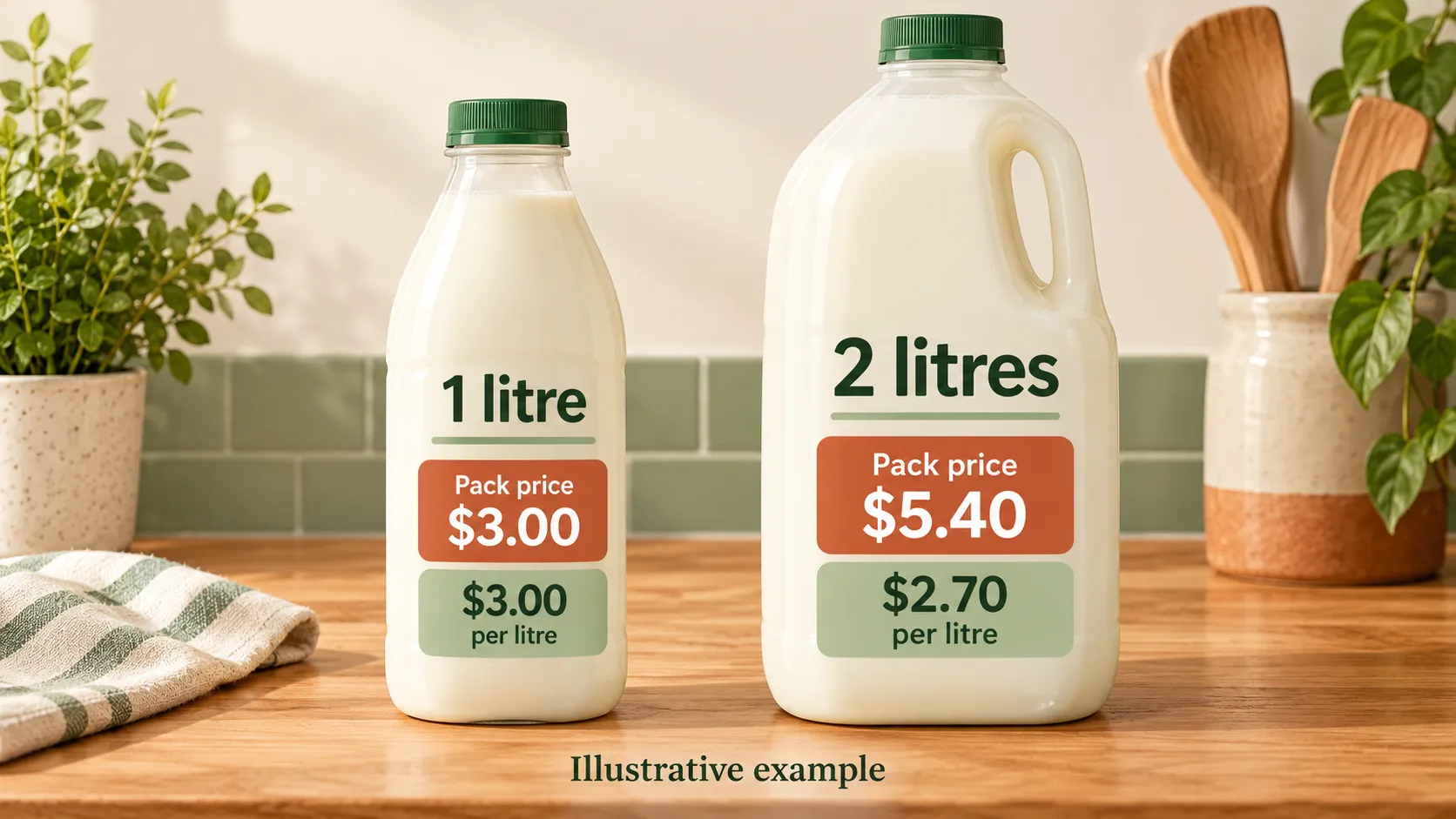
The bigger bottle is cheaper per litre, but costs more at checkout. Whether it is worth buying depends on how much milk you need.
Want your kitchen stock and next shopping plan in one place? Join Marsonya’s early-access list and we will email you when access opens.
When is the smaller pack the better buy?
A smaller pack can be the better choice when you already have food at home, will not use the extra quantity, or need to keep today’s bill down. The lowest unit price is useful information, but it cannot tell you how much your family needs before the next shop.
If there is still milk in the fridge and you only need one more litre, the smaller bottle in the example leaves money for something else. If your household will use two litres and can afford the purchase, the larger bottle offers better value per litre.
What are the unit-pricing rules in NZ?
NZ unit-pricing rules cover qualifying grocery retailers and products, rather than every shop and item. The Commerce Commission says covered physical stores had to comply by 31 August 2024, and covered online stores by 31 August 2025. Unit prices must be clear and legible alongside the marked price.
The Commerce Commission’s guide sets out retailer coverage and links to the detailed rules. When comparing offers, also check that you qualify for any member price and that the pack suits your meals.
How can Marsonya help with the next shop?
Marsonya keeps your pantry, fridge and freezer records together, so you can check what is already at home before adding groceries to your list. Open Buy Plan to see an estimated list total from available store prices, with options for one store or a split across stores.
Buy Plan does the list-price calculation for you. If the estimate is more than you want to spend, change the list and check again. The retailer’s checkout gives the final price and any delivery or pickup charges.
Use the shelf label to compare pack sizes, and Marsonya to organise what you need to buy. For the wider shop, see our grocery savings guide.
What else do people ask about supermarket unit prices?
Does a special always have the lowest unit price?
No. Compare the offer's unit price with other suitable packs, including any membership conditions. Consumer Protection explains that unit prices also apply to sales and club deals for covered products.
Does every supermarket product need a unit price?
No. Coverage depends on the retailer and product. Consumer Protection lists exemptions including alcohol, flowers and meals prepared in-store. Its guide links to the detailed rules.
Can a lower unit price make my shopping bill higher?
Yes. A larger pack can cost less per litre or kilogram but more to buy today. Check the full pack price and whether your household needs the extra food.