
Meal planning from your pantry: buy only what you need
Plan a few meals around food already in your pantry, fridge and freezer, starting with suitable food that needs using sooner. Choose familiar dishes and put only the missing ingredients on your shopping list. Leave room for changes so the plan fits the evenings your household will actually eat at home.
Where should a pantry meal plan start?
Start with the dinners you expect to eat at home and suitable food that needs using sooner. Heart Foundation NZ recommends planning meals until the next shop and checking the fridge and cupboards before buying more. Include food already in the freezer too. A late work night needs a different dinner from an evening when you have time to cook.
Without food records, remembering what is available can mean another search through the cupboards. Marsonya keeps your pantry, fridge and freezer records together and highlights recorded food nearing its date. Barcode lookup identifies packaged products, while camera scanning saves recognised printed dates with the food record. A quick Eaten swipe updates a tracked unit when it is used.
Join Marsonya’s early-access list to hear when access opens.
You choose the meals. The food record helps you start from what is available, rather than building a new shopping list from memory. Follow food labels and storage instructions when deciding what is suitable to use.
How do you turn those ingredients into dinners?
Choose familiar meals that work with the food you have, rather than recipes that need lots of extra purchases. A vegetable can fit more than one dish, and frozen ingredients can fill a gap. The useful question is what your household would enjoy eating with those ingredients this week.
For example, imagine you have spinach, eggs, pasta, a jar of tomato sauce and frozen peas. Spinach and peas could go into an omelette. Pasta with the sauce and more peas could cover another dinner.
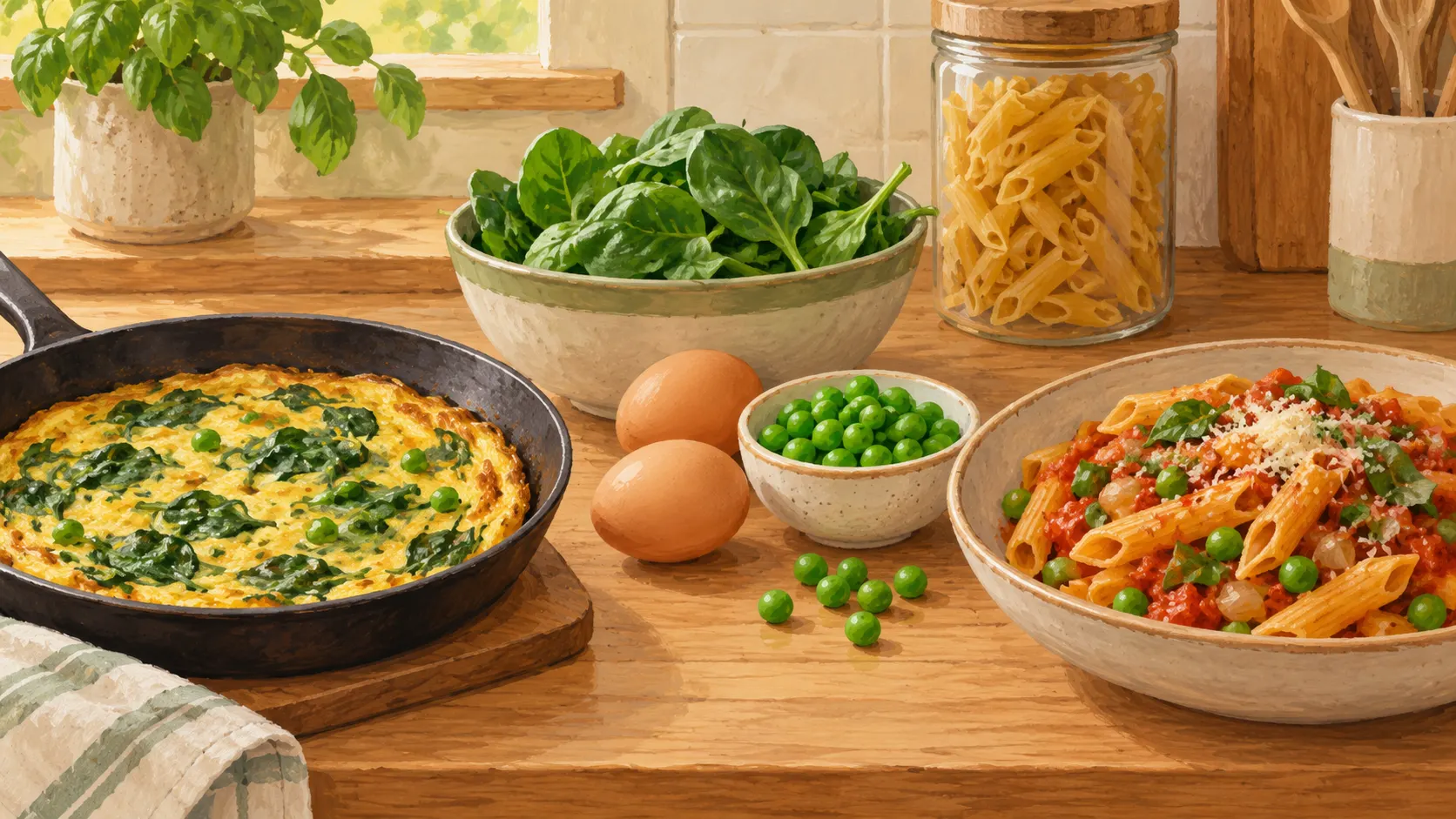
Love Food Hate Waste’s kitchen-first advice also suggests adapting meals with similar ingredients you already have. If a recipe asks for one vegetable and another suitable vegetable is in the fridge, you may not need a special trip. Choose swaps that suit the dish and your household’s dietary needs.
Keep an easy option for a busy evening. A suitable prepared meal already in the freezer counts as dinner too; every night does not need a new recipe.
How do you turn the meals into a smaller shop?
Put the missing ingredients on the shopping list, with any other food your household needs. Food already at home does not need buying again just because it appears in a recipe. If you want bread with the omelette but have the other ingredients, bread may be the only addition for that meal.
Healthify’s NZ budget guide recommends connecting planned meals with what you need to buy and how much you can spend. Keep the missing ingredients within your shopping budget.
Marsonya keeps the shopping list alongside household food records. Buy Plan calculates an estimated list total from available store prices and groups purchases by store, so you can consider the cost without adding up each item yourself. You choose the groceries; the retailer confirms final prices, offer eligibility and any charges at checkout.
Our grocery shopping guide explains how the list becomes a shopping plan. For keeping the underlying food record useful, see what belongs on a pantry inventory checklist.
What else do people ask about planning meals from the pantry?
Do I need to plan every meal for the whole week?
No. Start with a few dinners you expect to eat at home. Leave space for changing plans and meals already in the freezer. A shorter plan you use is more helpful than a full menu that does not fit the week.
Does pantry meal planning include the fridge and freezer?
Yes. Eggs, vegetables, frozen ingredients and prepared meals can be as useful as cupboard staples. Consider suitable food from all three places when choosing dinner.
Will planning from the pantry mean I can skip shopping?
Sometimes you may already have what a meal needs. Other meals will need fresh food or a missing ingredient. The aim is to buy what helps feed your household, rather than avoid every purchase or force unsuitable ingredients into dinner.