
How to use the FIFO method in your pantry
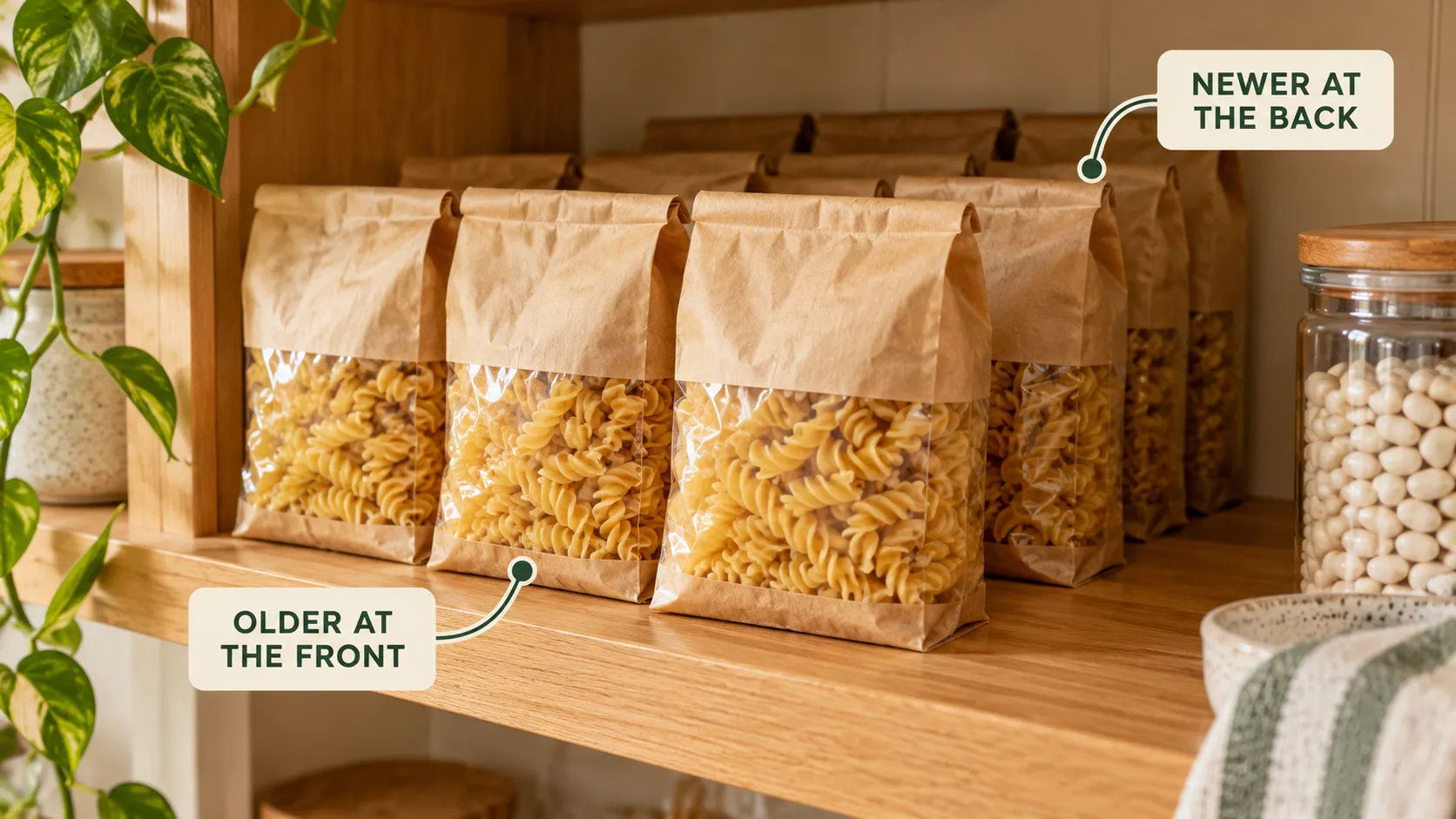
First in, first out means putting new stock behind existing stock so older items are reached first. Check date labels too: a newer purchase may have an earlier use-by date. Marsonya sorts recorded pantry, fridge and freezer items by expiry, helping you choose what to use next.
When unpacking groceries, put new packets behind the ones already on the shelf. That makes older food easier to reach when you cook. Check the dates as you do it, since the order of purchase does not always match the order of expiry.
To keep food dates and stock records together, join Marsonya’s early-access list. We will email you when access opens.
What is the FIFO method?
First in, first out is a stock-rotation rule: use earlier purchases before newer ones. Place the older packet at the front and the new packet behind it. If the new packet has a shorter remaining life, put it first instead. Always follow use-by dates and storage instructions; rotation does not make food past a safety date usable.
Food Standards Australia New Zealand explains why use-by dates concern safety while best-before dates concern quality. Use the label as well as purchase order when choosing the next packet.
How do you set up FIFO at home?
Start with one shelf. Check dates and put the items you need to use sooner within reach. When groceries arrive, compare their dates with existing stock before putting them away. Include a date check when planning the next shop so older food has a place in upcoming meals.
Where does FIFO break down in a real household?
The layout stops helping if new tins are put in front of old ones. Explain the routine to everyone who unpacks the shopping, and make room behind existing stock. Check the fridge and freezer separately: the order on a pantry shelf tells you nothing about food stored elsewhere.
Can an app run FIFO for you?
Marsonya sorts recorded food by expiry, so the next meal can start with food that needs using sooner. Camera scanning saves recognised printed dates with the food record, reducing date typing. The mobile app can schedule reminders when phone notifications are allowed; the cupboard does not need a separate written date list.
You still arrange the packets and follow their storage instructions. A quick quantity-use swipe updates tracked stock as food is used. The app cannot see physical consumption or decide that food is safe.
For the shelf layout, see how to organise a pantry into zones. The pantry inventory guide explains how to maintain a stock record.
What else do people ask about FIFO in a home pantry?
Should I use the oldest purchase if its date is later?
Use the food with the shorter remaining life first, following its label. Purchase order is a useful shelf habit, but the order of expiry can differ.
Does FIFO make food past its use-by date usable?
No. Stock rotation does not change a safety date or undo poor storage. Follow the use-by date and the food's storage instructions.
Do I need a separate list of every expiry date?
Marsonya can save recognised printed dates with the camera and sort recorded food by expiry. You can use that view without copying dates into a second list. The physical packets still need a sensible shelf order.